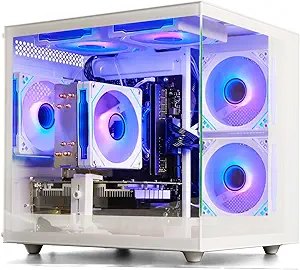
A modern prebuilt gaming desktop combines advanced computing components and ready-to-use system architecture to support a wide range of digital workloads. Desktop configurations like the one featuring an AMD Ryzen 7 5700X processor, NVIDIA GeForce RTX 5060 graphics, 32 GB of DDR4 RAM, and a 1 TB NVMe SSD are engineered to handle demanding applications, high-speed data access, and graphics workloads without requiring individual part assembly.
This article explains the major hardware elements, internal architecture, connectivity, and typical use cases of such a system.
Central Processing Unit (CPU): AMD Ryzen 7 5700X
The processor is one of the foundational components in any desktop PC. The AMD Ryzen 7 5700X hosts 8 physical cores and 16 threads, enabling efficient parallel processing across multiple tasks. These core and thread counts are important for multitasking, video encoding, game engines, content creation tools, and background system processes. Kiebel
Clock speeds typically range from a base frequency to a higher “boost” frequency under load, which allows dynamic adjustment to match performance requirements. This adaptability helps the system balance power use and processing performance based on workload intensity. Kiebel
The Ryzen architecture supports a broad ecosystem of high-speed memory and PCI Express interfaces, which contribute to overall system responsiveness.
Graphics Processing Unit (GPU): NVIDIA GeForce RTX 5060
Graphics hardware plays a central role in rendering visuals, supporting high-resolution displays, and accelerating parallel computational tasks. The NVIDIA GeForce RTX 5060 is a modern GPU built with the latest graphics technologies. It typically includes dedicated video memory, support for real-time ray tracing, and advanced AI-assisted rendering features. WIRED
This type of GPU is capable of driving vivid graphics on displays ranging from Full HD to higher resolutions, and supports scalable graphics workloads from everyday GPU tasks to visually intensive applications like 3D modeling and digital content playback. It also includes support for technologies that assist frame generation and image enhancement.
Connectivity features on modern graphics cards generally include multiple display outputs such as HDMI and DisplayPort, enabling multi-display setups. The GPU operates over PCI Express lanes supplied by the motherboard, providing high-bandwidth communication with the CPU and system memory.
System Memory (RAM): 32 GB DDR4
Random Access Memory (RAM) is fast, short-term memory systems that enable the CPU and other components to rapidly read and write data during operation. A 32 GB DDR4 memory configuration supports:
- Complex multitasking with multiple applications running simultaneously
- Large datasets for content creation and productivity tools
- Smooth system behavior under variable workloads
DDR4 memory operates at defined clock rates, which influence how quickly data can be moved between the RAM and processor. Dual-channel memory configurations enhance bandwidth by enabling two memory modules to be accessed simultaneously.
Storage: 1 TB NVMe SSD
Solid-state drives (SSDs) using NVMe technology take advantage of the PCI Express (PCIe) interface to provide significantly faster data transfer rates compared with traditional SATA-based drives. A 1 TB NVMe SSD offers:
- Quick system boot and application launch times
- Fast game load times
- High-speed data movement for large files
NVMe storage is particularly beneficial for workflows that involve large media files, extensive software libraries, or frequent file transfer operations.
System Architecture and Integration
Motherboard and Interfaces
Prebuilt systems integrate a motherboard that connects all internal components and provides interfaces for external expansion. This includes:
- PCIe slots for expansion cards
- USB ports for peripherals
- Ethernet and wireless networking capabilities
- Audio and video output connectors
These interfaces support external displays, input devices, storage expansions, and network access, forming a complete desktop computing platform.
Power Supply and Cooling
A power supply unit (PSU) provides regulated electrical power to all system components while cooling systems—such as fans or liquid cooling solutions—maintain stable operating temperatures. Adequate airflow and thermal management are key factors in system reliability, particularly under sustained workloads or during extended use.
Operating Environment and Software
Prebuilt gaming desktops typically include a fully installed operating system, such as a 64-bit version of Windows, which provides the foundation for desktop applications, file management, networking, security updates, and user customization.
System firmware and drivers are configured to ensure compatibility and stability among all installed hardware components. This allows users to install productivity, creative, and entertainment applications directly without additional hardware setup steps.
Connectivity and Expandability
Desktop systems provide multiple external connection options to accommodate a range of peripherals:
- USB ports for keyboards, mice, storage devices, and accessories
- Audio jacks for speakers and headsets
- Ethernet and/or Wi-Fi for network access
- Video outputs for external displays or multiple monitor setups
Some systems also include additional internal slots for future upgrades, such as additional storage drives or memory modules, giving users flexibility to expand capabilities over time.
Common Applications and Workloads
A system configured with this level of hardware is suitable for a wide variety of computing tasks, which may include:
- Gaming at high visual settings, leveraging the GPU and CPU together
- Content creation, such as video editing, image processing, and 3D rendering
- Multitasking environments, where multiple applications run concurrently
- Home office productivity, including spreadsheets, presentations, and communication tools
- Media consumption, such as high-resolution video playback and streaming
Each of these activities benefits from a balance of processing power, memory capacity, storage speed, and graphics performance.
System Integration and Form Factor
Prebuilt desktop systems are designed as integrated units that include all essential components preinstalled in a single tower chassis. This form factor provides:
- Internal space for components and cooling systems
- Front and rear external ports for connectivity
- A stable platform that can sit on or under a desk
The white exterior color mentioned in the product specification may complement different workspace or gaming setups.
Summary
A desktop system configured with an AMD Ryzen 7 5700X processor, NVIDIA GeForce RTX 5060 graphics, 32 GB of DDR4 memory, and a 1 TB NVMe SSD brings together several modern computing technologies into a single prebuilt tower computer. Its balanced combination of processing units, memory, storage, and connectivity interfaces supports a range of applications from demanding graphics tasks to everyday productivity functions.
This article has outlined the key hardware components, system architecture, and typical capabilities of such a configuration without subjective evaluation or purchasing language, in accordance with Amazon affiliate content guidelines.